Rehabilitación Oral y Estética Dental
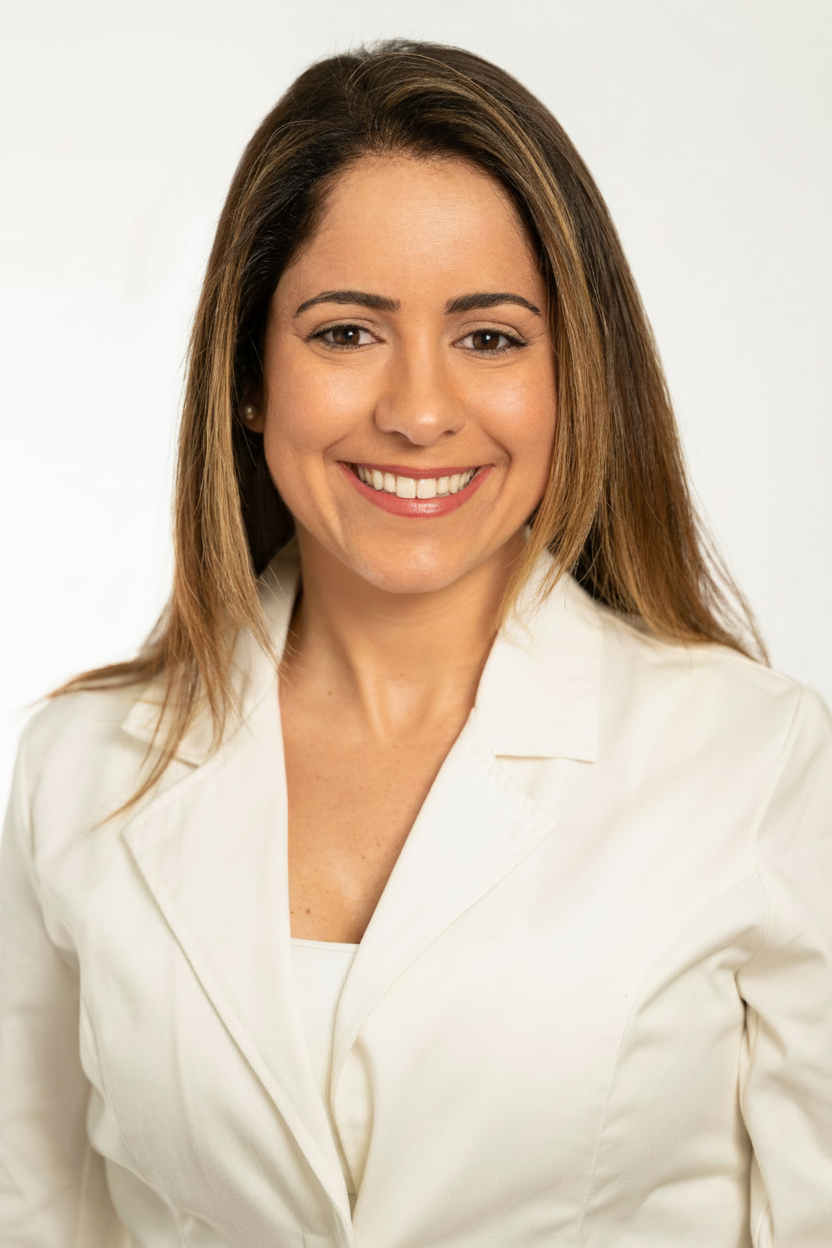
Dayana da Silva Gonçalves es odontóloga con dedicación a Rehabilitación Oral y Estética Dental. Su actividad clínica se desarrolla en Madrid. Cursó sus estudios de Odontología en Universitat de Barcelona en 2010.
Con el tiempo, ha sumado formación específica en endodoncia y ha llegado al nivel de doctorado. El último de esos programas fue el Doctorado en Odontología, en Universidad Rey Juan Carlos (2016).
Su práctica diaria se desarrolla en Clínica dental Da Silva y Mendoza, como director médico (Madrid, España).
Además de la clínica, mantiene actividad de docencia en Universidad Rey Juan Carlos, en programas como Especialista en Endodoncia y Odontología Conservadora y Experto en Odontología Estética.
Su aportación al colectivo: imparte 3 formaciones — entre ellas «Cómo lograr buenos puntos de contacto y elevar márgenes profundos» y «Incrustaciones dentales: indicaciones, diseños, tallados y cementado» — en Madrid, España y Móstoles, Madrid, España y firma 4 publicaciones científicas en revistas como Research Square (preprint) y BMC Medical Education.
Explora su trayectoria
Doctorado en Odontología
Doctorado · Universidad Rey Juan Carlos · Madrid, España
Máster en Odontología Integrada
Máster · Universidad Rey Juan Carlos · Madrid, España
Especialista en Endodoncia y Odontología Conservadora
Especialista · Universidad Rey Juan Carlos · Madrid, España
Postgrado de Odontología Operatoria y Estética
Experto · Universidad Central de Venezuela · Caracas, Venezuela
Grado en Odontología
Grado · Universitat de Barcelona · Barcelona, España
Grado en Odontología
Grado · Universidad Santa María · Caracas, Venezuela
Clínica dental Da Silva y Mendoza · Madrid, España
Profesor · Especialista en Endodoncia y Odontología Conservadora
Universidad Rey Juan Carlos · Madrid, España
Profesor · Experto en Odontología Estética
Universidad Rey Juan Carlos · Madrid, España
Viernes 25 de septiembre de 2026 · 10:00-14:00 · Madrid · Clínica privada · Presencial
Rehabilitación Oral y Estética Dental
Viernes 2 de octubre de 2026 · Madrid, España · Presencial
Odontología General y Restauradora · Odontología Restauradora Directa
Sábado 7 de noviembre de 2026 · Móstoles, Madrid, España · Presencial
Odontología General y Restauradora · Odontología Restauradora Indirecta
Research Square (preprint)
Autores · Bruno Baracco, Nuria Escribano, Dayana Da Silva Gonçalves, Virginia Belliard-Tiol
Students' self-assessment and rubrics are pedagogical tools designed to enhance learning and evaluation processes. Achieving convergence between learners and teachers is paramount during the learning of complex treatments such as endodontic procedures, although it can be challenging due to uncontrollable factors that may affect task performance and perception. This study aimed to evaluate the influence of various factors (anatomical difficulty, type of instrumentation system, and training level) on the assessments of root canal treatments (RCT) by teachers and students using a rubric, and to determine the degree of agreement between them.
BMC Medical Education
★ Alto impacto · Q1 · IF 4.491Autores · Nuria Escribano, Virginia Belliard-Tiol, Bruno Baracco, Dayana Da Silva Gonçalves
Coautores Doctor&Cols · Diana Villanueva Ortiz
Students' assessment should be carried out in an effective and objective manner, which reduces the possibility of different evaluators giving different scores, thus influencing the qualification obtained and the consistency of education. The aim of the present study was to determine the agreement among four evaluators and compare the overall scores awarded when assessing portfolios of endodontic preclinical treatments performed by dental students by using an analytic rubric and a numeric rating scale.
Journal of Clinical and Experimental Dentistry
Q3 · IF 1.368Autores · Dayana Da Silva Gonçalves; Laura Ceballos; M. Victoria Fuentes
Background: The aim of this study was to determine the influence of the gingival margin position and the adhesive strategy selected to perform deep margin elevation (DME) in marginal sealing of resin composite inlays by a nanoleakage test. Material and methods: 12 sound third molars were selected and expulsive MOD cavities for inlays were prepared. Experimental groups were established according to gingival margin location (enamel: 1 mm above cemento-enamel junction (CEJ), dentin: 1 mm below CEJ, or DME, and the adhesive strategy used to lute inlays and elevate the gingival margin. Therefore, the six experimental groups were: 1) Enamel + etch-and-rinse adhesive (ERA) Adper Scotchbond 1XT (SB1XT); 2) Dentin + SB1XT; 3) DME + SB1XT; 4) Enamel + self-etching adhesive (SEA) with enamel selective etching Clearfil SE Bond (CSE); 5) Dentin + CSE; 6) DME + CSE. Resin composite inlays were constructed (Gradia Indirect) and all luted with the same resin cement (RelyX ARC). Specimens were submitted to nanoleakage test. Results were analyzed by Kruskal-Wallis and Mann-Whitney U tests with Bonferroni correction (p<0.05). Results: A perfect sealing ability was evidenced for experimental groups with gingival margins on enamel. Similar nanoleakage values were determined when CSE adhesive was applied regardless the gingival margin position. The highest silver nitrate infiltration was detected for elevated margins with the ERA SB1XT. Conclusions: The SEA Clearfil SE Bond showed higher sealing ability than the ERA Adper Scotchbond 1XT when margins were located on dentin, regardless margin elevation. Gingival margins on enamel together with enamel acid etching provided an excellent sealing with both adhesive systems. Key words: Adhesion, composite inlays, gingival margin, deep margin elevation, marginal seal, nanoleakage test.
Clinical Oral Investigations, Vol. 21(1)
★ Alto impacto · Q1 · IF 3.846Autores · Dayana Da Silva Gonçalves; M. Cura; Laura Ceballos; M. Victoria Fuentes
Objectives: The objective of the present study was to evaluate the influence of proximal box elevation on microtensile bond strength (mTBS) of composite inlays to the proximal box floor, using either a total-etch or a self-adhesive resin cement. Materials and methods: Twenty-five human molars were selected, and a class II OM (inlay) cavity preparation was performed in each tooth. Cavities were randomly assigned into four experimental groups, according to the location of the proximal cervical margin (located 1 mm below cementoenamel junction (CEJ), or with proximal box elevation with composite resin) and the resin cement used for luting (a total-etch resin cement RelyX ARC or a self-adhesive resin cement G-Cem). After 1-week water storage, samples were subjected to mTBS test. Results were analyzed by Kruskal–Wallis and Mann–Whitney U tests (p < 0.05). Results: Kruskal–Wallis revealed statistically significant differences among experimental groups (p = 0.007). Both resin cements showed similar bond strength values when cervical margin was located below CEJ. The proximal box elevation improved the bond strength of composite inlays for both resin cements. However, only for G-Cem was this improvement statistically significant. Conclusions: The proximal box elevation improved the bond strength attained by G-Cem resin cement. For RelyX ARC, the position of the cervical margin did not affect composite inlays bond strength. Clinical relevance: Proximal box elevation does not decline bond strength of composite inlays to the proximal floor when a total-etch or a self-adhesive resin cement is used.
Rehabilitación Oral y Estética Dental
Murcia · España
Rehabilitación Oral y Estética Dental
Madrid · España
Rehabilitación Oral y Estética Dental
Valencia · España
Rehabilitación Oral y Estética Dental
Zaragoza · España
Rehabilitación Oral y Estética Dental
Madrid · España
Rehabilitación Oral y Estética Dental
Paraguay