Cirugía Oral e Implantología
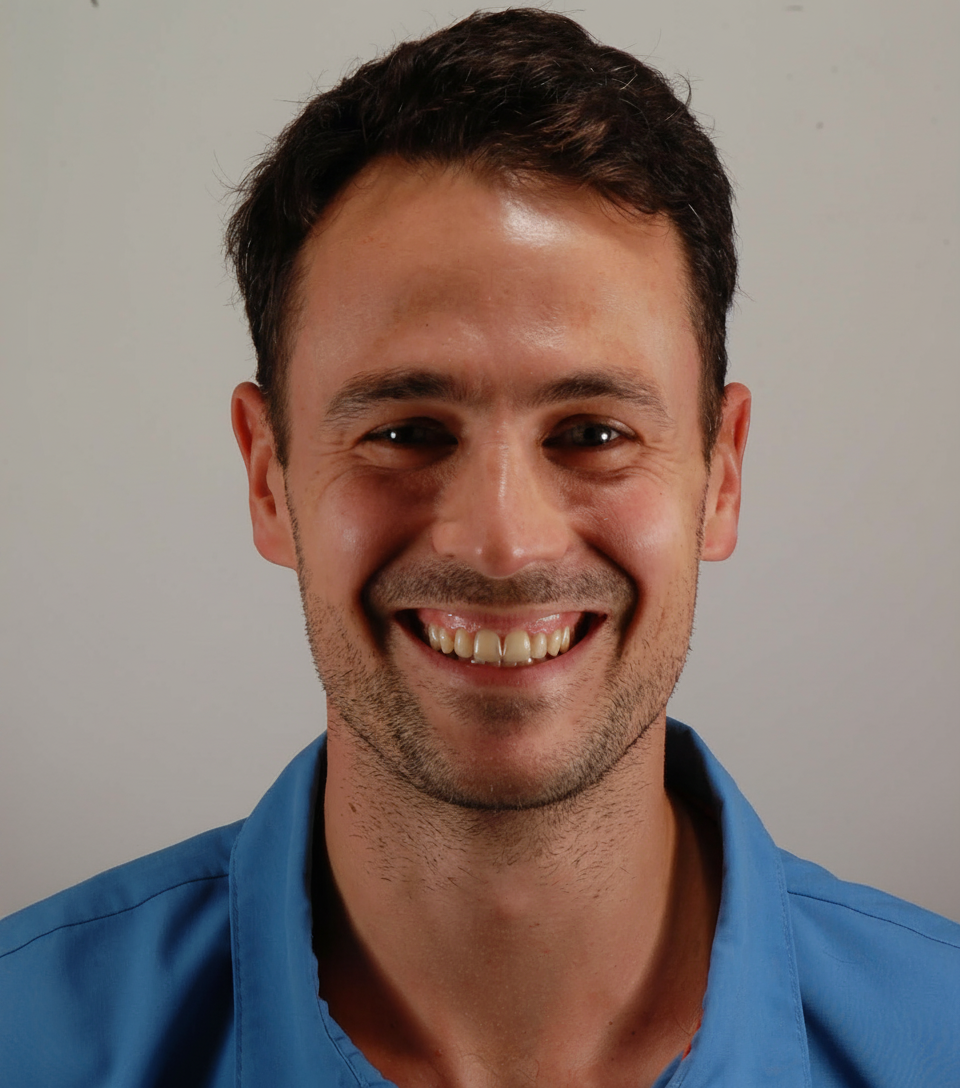
Nicolás A. Rubio centra su práctica en Cirugía Oral e Implantología, y trabaja de forma específica la cirugía avanzada y regenerativa. Se formó como odontólogo en Universidad de Buenos Aires en 2010.
Su recorrido formativo explica el resto: ha orientado su formación de posgrado hacia periodoncia y prótesis.
Compagina la clínica con la docencia en Universidad de Buenos Aires, en programas como Grado / Licenciado en Odontología.
Dentro de Doctor&Cols firma 9 publicaciones científicas en revistas como Periodontal and Implant Research y Clinical Dentistry Reviewed.
Explora su trayectoria
Experto en Clínica Periodontal
Experto · Universidad Complutense de Madrid · Madrid, España
Implantología
Otro · Universidad Nacional Autónoma de México · México, México
Especialista en Prótesis Dentobucomaxilar
Especialista · Universidad de Buenos Aires · Buenos Aires, Argentina
Grado / Licenciado en Odontología
Grado · Universidad de Buenos Aires · Buenos Aires, Argentina
Sin experiencia registrada
Profesor · Grado / Licenciado en Odontología
Universidad de Buenos Aires · Buenos Aires, Argentina
Periodontal and Implant Research
Q3 · IF 1.109Autores · Nicolás A. Rubio; Nicolas Marsano; Salathiel Amador; Jorge Mario Galante
Coautores Doctor&Cols · Nicolas Marsano
Este artículo describe un nuevo flujo de trabajo digital, simple y eficiente, para casos complejos de arcada completa que involucran múltiples extracciones, retirada de implantes mal posicionados o biológicamente comprometidos, colocación de nuevos implantes y protocolos de carga inmediata con restauraciones provisionales. El enfoque permite realizar cirugía guiada de implantes en dos citas e integrar implantes previamente colocados en el plan protésico siempre que sea posible, reduciendo morbilidad y tiempo en sillón. El acrónimo S.I.M. corresponde a splint scan (S), implant integration (I) y mock-up loading (M).
Clinical Dentistry Reviewed
Q4 · IF 0Autores · Nicolás Agustín Rubio
La obtención de datos digitales fiables de la cavidad oral del paciente es una de las claves para lograr un resultado preciso en la planificación virtual de implantes. Los clínicos necesitan dos tipos de datos: réplicas virtuales de los maxilares, obtenidas mediante escaneos de superficie, e imágenes médicas de las anatomías de tejidos duros y blandos. Por un lado, conocer la topografía ósea y el grosor de los tejidos blandos es indudablemente necesario al planificar cirugía de implantes. Los estudios CBCT pueden importarse al ordenador para personalizar parámetros como brillo, contraste y distancia entre cortes, mediante el formato universal DICOM. Por otro lado, la cirugía de implantes debe guiarse también por un plan protésico, para lo cual la información de los maxilares es necesaria para configurar el plan y fabricar una plantilla que lo reproduzca. Los escaneos de superficie obtenidos con escáneres intraorales, entregados como archivos STL, ayudan a superar la baja definición de tejidos blandos y la distorsión por restauraciones metálicas que aparecen en las imágenes CBCT. La correcta fusión de ambos archivos digitales (DICOM y STL) es otro factor clave para lograr un resultado preciso en la planificación virtual de implantes.
Digital Dental Implantology: From Treatment Planning to Guided Surgery (Springer)
Autores · Diego A. Coccorullo, Nicolás A. Rubio
This chapter explains implant driving options and assesses its accuracy related, followed by an attempt to include a literature review regarding considerations for improving accuracy in implant guided surgery.
Digital Dental Implantology: From Treatment Planning to Guided Surgery (Springer)
Autores · Diego A. Brancato, Jorge M. Galante, Nicolás A. Rubio
Open and honest discussion between healthcare providers and patients and families affected by error is considered to be a central feature of high quality and safer patient care, evidenced by the implementation of open disclosure policies and guidance internationally. This paper discusses the perceived enablers that UK doctors and nurses report as facilitating the enactment of open disclosure. Semistructured interviews with 13 doctors and 22 nurses from a range of levels and specialities from 5 national health service hospitals and primary care trusts in the UK were conducted and analysed using a framework approach. Five themes were identified which appear to capture the factors that are critical in supporting open disclosure: open disclosure as a moral and professional duty, positive past experiences, perceptions of reduced litigation, role models and guidance, and clarity. Greater openness in relation to adverse events requires health professionals to recognise candour as a professional and moral duty, exemplified in the behaviour of senior clinicians and that seems more likely to occur in a nonpunitive, learning environment. Recognising incident disclosure as part of ongoing respectful and open communication with patients throughout their care is critical.
Digital Dental Implantology: From Treatment Planning to Guided Surgery (Cap. 4, pp. 67-89)
Autores · Nicolás A. Rubio; Diego A. Brancato; Jorge M. Galante
Se pueden diseñar diferentes tipos de plantillas para la cirugía guiada de implantes. Cada variante tiene sus ventajas, desventajas, indicaciones y limitaciones. Los materiales empleados para fabricarlas ya se discutieron en el Cap. 3, por lo que este capítulo se centra en las indicaciones clínicas de cada tipo de plantilla.
Digital Dental Implantology: From Treatment Planning to Guided Surgery (Springer)
Autores · Nicolás A. Rubio
Paramedics make important and increasingly complex decisions at scene about patient care. Patient safety implications of influences on decision making in the pre-hospital setting were previously under-researched. Cutting edge perspectives advocate exploring the whole system rather than individual influences on patient safety. Ethnography (the study of people and cultures) has been acknowledged as a suitable method for identifying health care issues as they occur within the natural context. In this paper we compare multiple methods used in a multi-site, qualitative study that aimed to identify system influences on decision making. The study was conducted in three NHS Ambulance Trusts in England and involved researchers from each Trust working alongside academic researchers. Exploratory interviews with key informants e.g. managers (n = 16) and document review provided contextual information. Between October 2012 and July 2013 researchers observed 34 paramedic shifts and ten paramedics provided additional accounts via audio-recorded 'digital diaries' (155 events). Three staff focus groups (total n = 21) and three service user focus groups (total n = 23) explored a range of experiences and perceptions. Data collection and analysis was carried out by academic and ambulance service researchers as well as service users. Workshops were held at each site to elicit feedback on the findings and facilitate prioritisation of issues identified. The use of a multi-method qualitative approach allowed cross-validation of important issues for ambulance service staff and service users. A key factor in successful implementation of the study was establishing good working relationships with academic and ambulance service teams. Enrolling at least one research lead at each site facilitated the recruitment process as well as study progress. Active involvement with the study allowed ambulance service researchers and service users to gain a better understanding of the research process. Feedback workshops allowed stakeholders to discuss and prioritise findings as well as identify new research areas. Combining multiple qualitative methods with a collaborative research approach can facilitate exploration of system influences on patient safety in under-researched settings. The paper highlights empirical issues, strengths and limitations for this approach. Feedback workshops were effective for verifying findings and prioritising areas for future intervention and research.
Digital Dental Implantology: From Treatment Planning to Guided Surgery (Springer)
Autores · Nicolás A. Rubio, Jorge M. Galante
Within the left ventricular myocardium, substantial differences can be observed in terms of both perfusion and energy turnover. In addition to the small transmural gradient from the subepi--to the subendocardium (1:1.2), more recent high-resolution studies reveal a major patchwork-pattern, e.g., in terms of flow. Adjacent 200 microliters areas can differ more than 3-fold in local perfusion. Low flow and high flow areas (< 50% or > 150% of mean flow, respectively) represent up to 1/5 of the left ventricular myocardium. This local flow pattern is temporally stable for at least days and possibly weeks. Low and high flow areas also differ in local energy metabolism. High flow areas are characterized by enhanced glucose phosphorylation and fatty acid permeability, resulting in increased uptake of these substrates. This is the basis for the recent finding that high flow areas are characterized by an enhanced turnover of the citric acid cycle and thus of local O2 consumption. Since local O2 supply and consumption are closely coupled, low flow areas display no biochemical signs of ischemia. Reducing local flow by 50% results in a similar rise of adenosine or lactate in low and high flow areas. Following complete cessation of perfusion, high flow areas display a greater risk of infarction, indicating enhanced energy demand. Further studies are needed to elucidate the molecular basis of this spatial heterogeneity and to test whether the 3-fold differences in local energy turnover within the myocardial wall also translate into comparable variations of local contractility.
Digital Dental Implantology: From Treatment Planning to Guided Surgery (Cap. 2, pp. 19-44)
Autores · Nicolás A. Rubio
En odontología digital de implantes se pueden encontrar dos tipos de paquetes de software. Cada programa dental puede catalogarse como software de planificación protésica o como software de planificación de implantes. Los primeros se usan principalmente por laboratorios dentales; los segundos, por clínicos para visualizar imágenes CBCT, planificar la colocación de implantes y diseñar plantillas quirúrgicas.
Revista Iberoamericana de Micología
Autores · Nicolás A. Rubio, Sebastián Ariel Puia, Silvia Toranzo, María Isabel Brusca
Cirugía Oral e Implantología
Asturias · España
Cirugía Oral e Implantología
Valencia · España
Cirugía Oral e Implantología
A Coruña · España
Cirugía Oral e Implantología
Granada · España
Cirugía Oral e Implantología
Granada · España
Cirugía Oral e Implantología
Almería · España