Cirugía Oral e Implantología
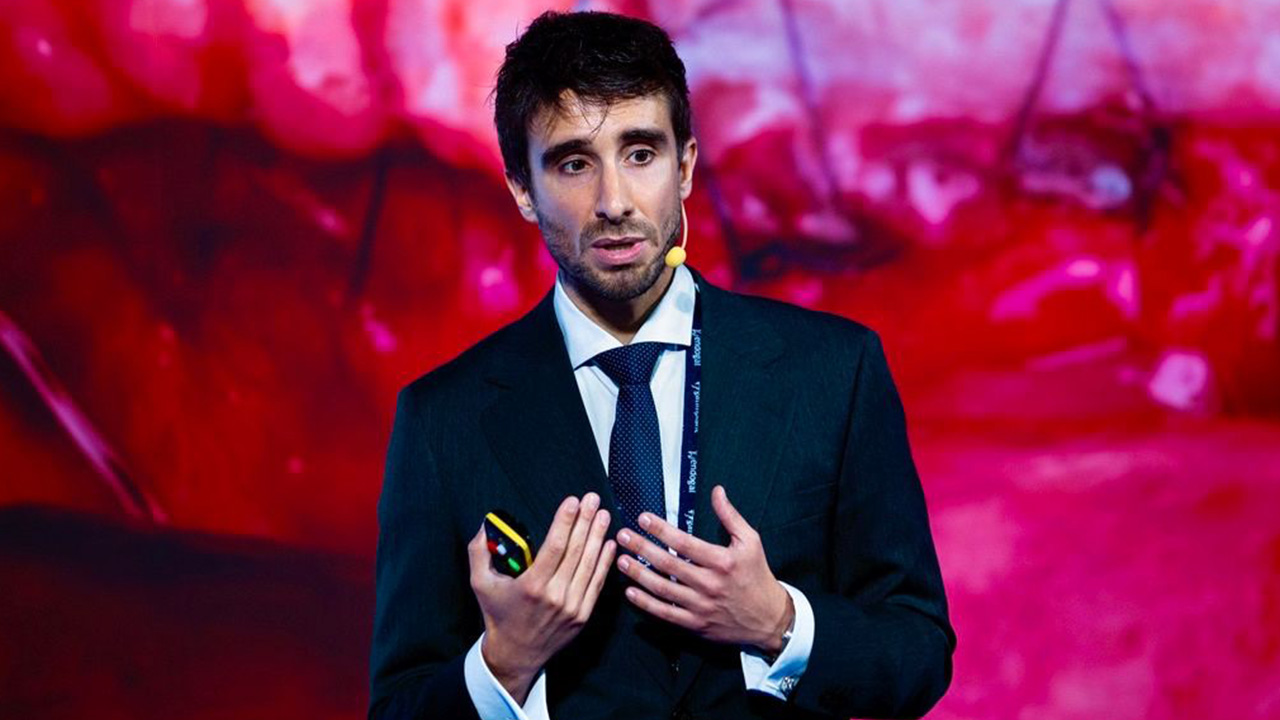
Sergio García Moreno centra su práctica en Cirugía Oral e Implantología, con la cirugía avanzada y regenerativa como eje de su trabajo. Ejerce en Madrid. Cursó sus estudios de Odontología en Universidad Rey Juan Carlos en 2013.
Con el tiempo, ha sumado formación específica en prótesis.
Actualmente ejerce como cirujano/implantólogo en Centro dental Avanzado, Clínica dental Álvarez Luckow y Centro dental Smiling en la provincia de Madrid.
Su aportación al colectivo: imparte una formación — entre ellas «Masterclass in Bone Augmentation» — en Patterson Mississauga · Mississauga, Canadá y firma 4 publicaciones científicas en revistas como Medicina oral, patología oral y cirugía bucal y Científica dental: Revista científica de formación continuada.
Explora su trayectoria
Experto en Implantoprótesis
Experto · Universidad Rey Juan Carlos · Madrid, España
Grado en Odontología
Grado · Universidad Rey Juan Carlos · Madrid, España
Centro dental Avanzado · Madrid, España
Clínica dental Álvarez Luckow · Madrid, España
Centro dental Smiling · Madrid, España
Clínica dental Robladen · Madrid, España
Clínica dental Doctores García Ruiz e Iglesias Esquiroz · Madrid, España
Sin actividad docente registrada
2–4 de octubre de 2026 · 9:00–17:00 · Patterson Mississauga · Mississauga, Canadá · Presencial
Implantología · Regeneración Ósea
Medicina oral, patología oral y cirugía bucal
Q2 · IF 2.165Autores · S Garcia Moreno, C Gutierrez Bonet, Borja Franco Carro, MJ Lopez-Silva Garcia, V. Paez Egido
The patient carried out posterior follow ups showing a positive healing of the bone around the surgical area.Conclusions: radiographic exploration of non erupted third molars is crucial for the early diagnosis of possible pericoronal cystic pathology associated.
Científica dental: Revista científica de formación continuada
Autores · S Garcia Moreno, María Isabel Leco Berrocal, Luis Jesús Rubio Alonso, Cristina Barona Dorado, José María Martínez González
Introduccion: Las comunicaciones orosinusales son soluciones de continuidad que se establecen entre la cavidad oral y el seno maxilar, causadas principalmente por extracciones dentarias. La mayoria de estas comunicaciones cierran espontaneamente por su pequeno tamano, pero otras fistulizan perpetuandose entonces la situacion patologica hasta que reciba el debido tratamiento, pudiendo producir patologia tanto a nivel local como general. Caso clinico; Se presenta el caso de un varon de 49 anos, sin antecedentes medicos de interes, remitido al servicio de Cirugia Bucal del Hospital Virgen de la Paloma, presentando una fistula bucosinusal de tres semanas de evolucion junto con una sinusitis aguda del seno maxilar izquierdo. Tras valorar las diferentes opciones terapeuticas, se opto un cierre de la misma mediante un colgajo, pediculado de bola adiposa de Bichat, cubriendolo posteriormente con colgajo vestibular de avance recto, lo que se conoce como tecnica de cierre en dos capas. Conclusiones: Existen multiples tecnicas descritas en la literatura para corregir esta entidad patologica, cada una con sus ventajas e inconvenientes. Sera necesario conocer las caracteristicas individuales de cada una de ellas para establecer el tratamiento mas adecuado para cada situacion.
Medicina oral, patología oral y cirugía bucal
Q2 · IF 2.165Autores · S Garcia Moreno, C Gutierrez Bonet, Natalia M. Rodriguez, L Rubio Alonso, Joseph Marino
Results: Data from 382 teachers from 30 schools spread across Galicia were obtained.Of the teachers completing the questionnaire, 59.4% have received first aid training; of these 2.1% received first aid training that included CTDI content, and 42.7% of the responding teachers have faced a CTDI in the past in the workplace.In relation to dental luxations, the most common action response (58.1%) was notifying parents.Similar results were obtained in cases of dental fractures.Primary action response errors related to the means of preserving avulsed teeth, usually opting for transporting teeth "dry".The 86.4% of teachers were interested in receiving specific training guidelines for action in responding to CTDIs.Conclusions: The knowledge of teachers on the first action measure to respond to a CTDI turned out to be significantly low.This is especially worrisome since many of the CTDIs occur in schools and increases the need to include CTDI content in teacher training programs.
Surgical Endoscopy
★ Alto impacto · Q1 · IF 3.009Autores · J. Loscertales, Miguel Congregado, Rafael Jiménez-Merchán, G. Gallardo, Ana Triviño, S Garcia Moreno, Beatriz Loscertales, Hugo Galera‐Ruiz
Many techniques have been used to treat palmar hyperhidrosis. Compensatory sweating is a difficult adverse effect. Clipping has been proposed because of its supposed reversibility when clips are removed at a later date. The primary aims of this article are to investigate the neuronal lesion of the sympathetic chain caused by clipping and to study the possibility of regeneration after removal of the clips. We performed an experimental study at the Minimally Invasive Surgery Centre Jesus Uson in Caceres (Spain). We used a swine model, performing clipping, unclipping, and extirpation of different segments of sympathetic chain with clips and after clip removal, following a chronogram of 10, 20, and 30 days. Pathologic studies of specimens and statistics were done at the University of Seville. Ten days after clipping, all sympathetic chains displayed evident Wallerian degeneration. Twenty days after clipping, Wallerian degeneration of myelinated fibers was more widespread and also more striking. Thirty days after clipping, a very marked macrophagic reaction was visible, with multiple signs of phagocytosis of myelin debris. By 30 days post operation and 20 days after clip removal, a few residual myelin and amyelinated fibers were visible. These findings suggest that axon regeneration is not possible. There are Wallerian degeneration and axon loss 10 days after clipping. The almost total absence of myelinated and amyelinated fibers following clip removal suggests that there was no nerve regeneration, and that therefore clipping cannot be considered a reversible technique.
Cirugía Oral e Implantología
Málaga · España
Cirugía Oral e Implantología
Ciudad Real · España
Cirugía Oral e Implantología
Madrid · España
Cirugía Oral e Implantología
Madrid · España
Cirugía Oral e Implantología
Las Palmas · España
Cirugía Oral e Implantología
Valencia · España